


Mortgage Rates Moved Meaningfully Lower in 2025
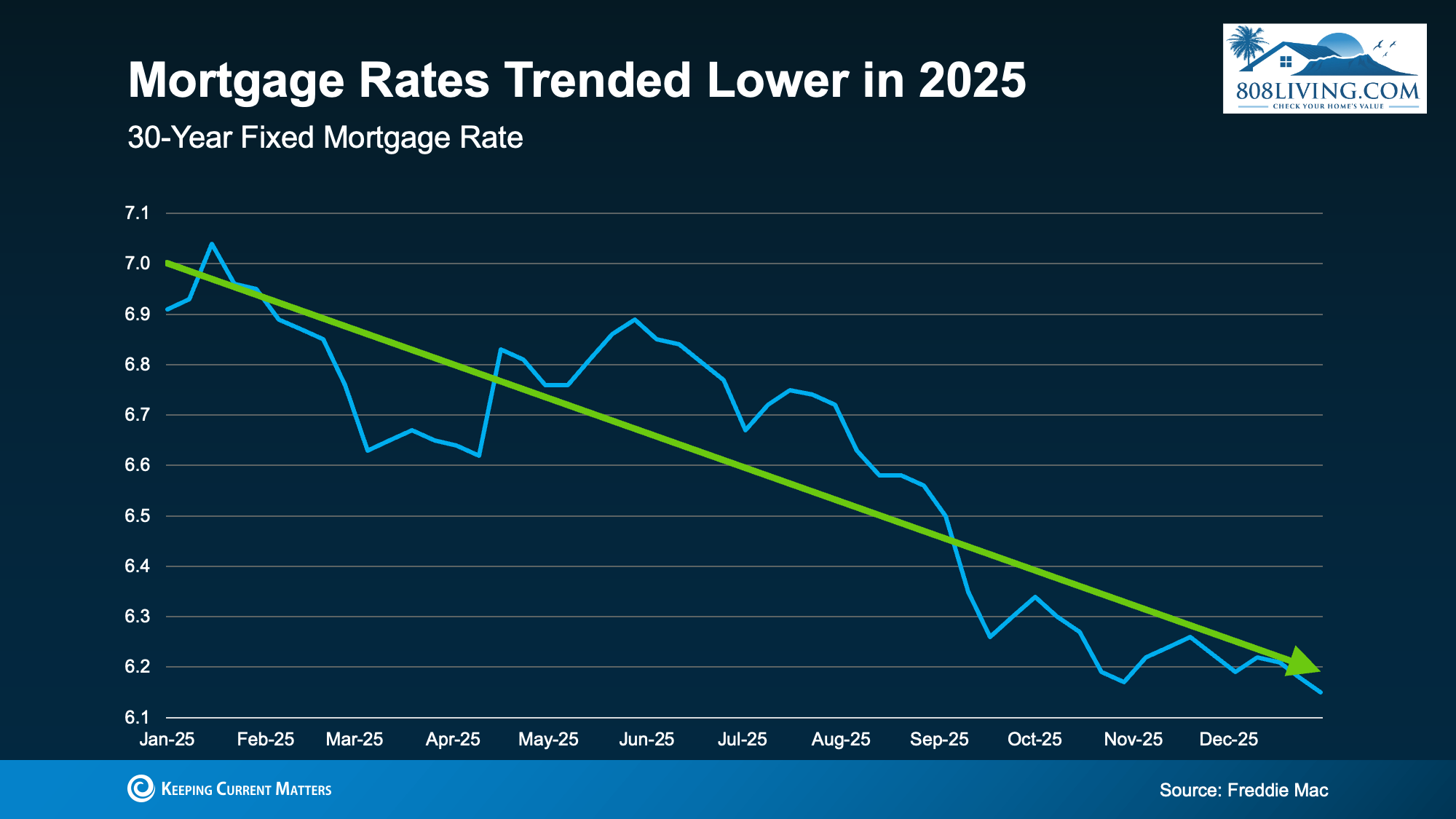
One of the biggest stories of 2025 was the decline in mortgage rates.
We started the year with the 30-year fixed hovering around 7%. Over the course of the year, rates steadily trended downward, landing in the low 6% range by year-end. Even now, we’re seeing rates bounce around 6.2%–6.25%, depending on economic data and global events.
That move, roughly three-quarters of a percent, was significant. It improved affordability, brought more buyers back into the market, and shifted overall momentum. Most forecasts suggest rates will likely remain in the low 6s this year, barring any major economic surprises.
Lower rates didn’t create a frenzy like we saw in 2020–2021, but they did meaningfully stabilize demand.
Inventory is Rebuilding and That’s a Big Deal
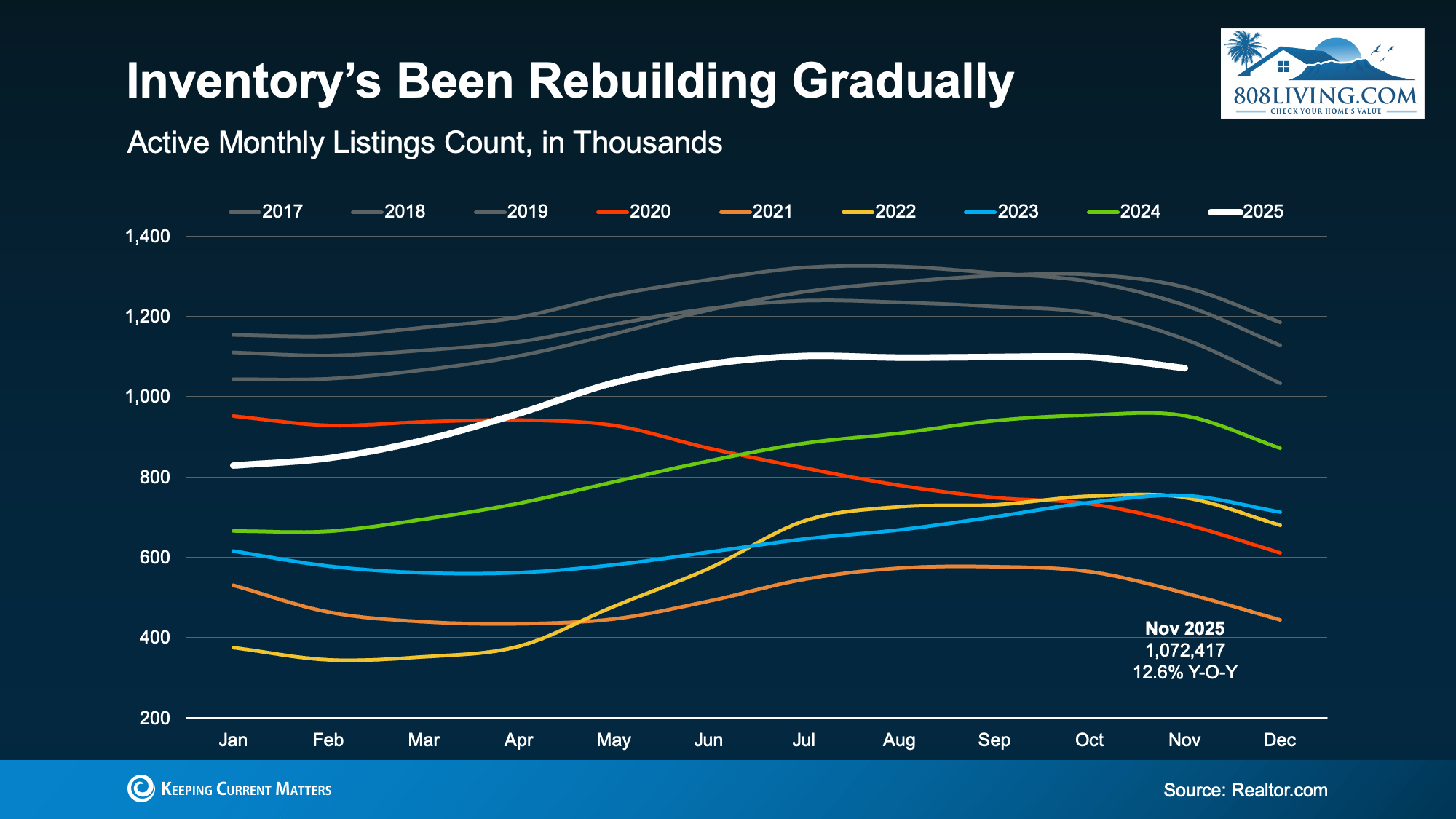
At the same time rates were coming down, inventory was climbing.
Throughout 2025, the number of active listings steadily increased. By late in the year, we were approaching levels more consistent with 2017–2019, the pre-COVID “normal” market.
That’s an important shift.
For the past few years, ultra-low inventory was the defining characteristic of the housing market. Now, supply is rebuilding:
-
Buyers have more choices
-
Sellers face more competition
-
Price growth has moderated
While we’re not fully back to pre-pandemic norms everywhere, the trend is clear: the market is rebalancing.
The Big Picture
When you step back and analyze the data, the story becomes clear.
In 2025:
-
Mortgage rates moved meaningfully lower
-
Inventory steadily rebuilt
-
Price appreciation moderated
That combination signals a market that is normalizing, not declining.
We are transitioning away from the artificial, stimulus-driven conditions of 2020–2022 and moving toward a more sustainable environment, one driven by fundamentals. Lower rates improved affordability. Increased inventory restored negotiation and choice. Slower price growth reduced volatility.
But here’s what matters most: national headlines don’t dictate local outcomes.
Real estate has always been hyper-local. Inventory levels, absorption rates, pricing pressure, and buyer behavior vary dramatically by city, neighborhood, and even price band. Interpreting those nuances, and knowing how to position a buyer or seller accordingly, is where true expertise comes in.
The data tells us the market is rebalancing.
The strategy depends on where you are and what you’re trying to accomplish.
And that leads to the real question: What’s next?